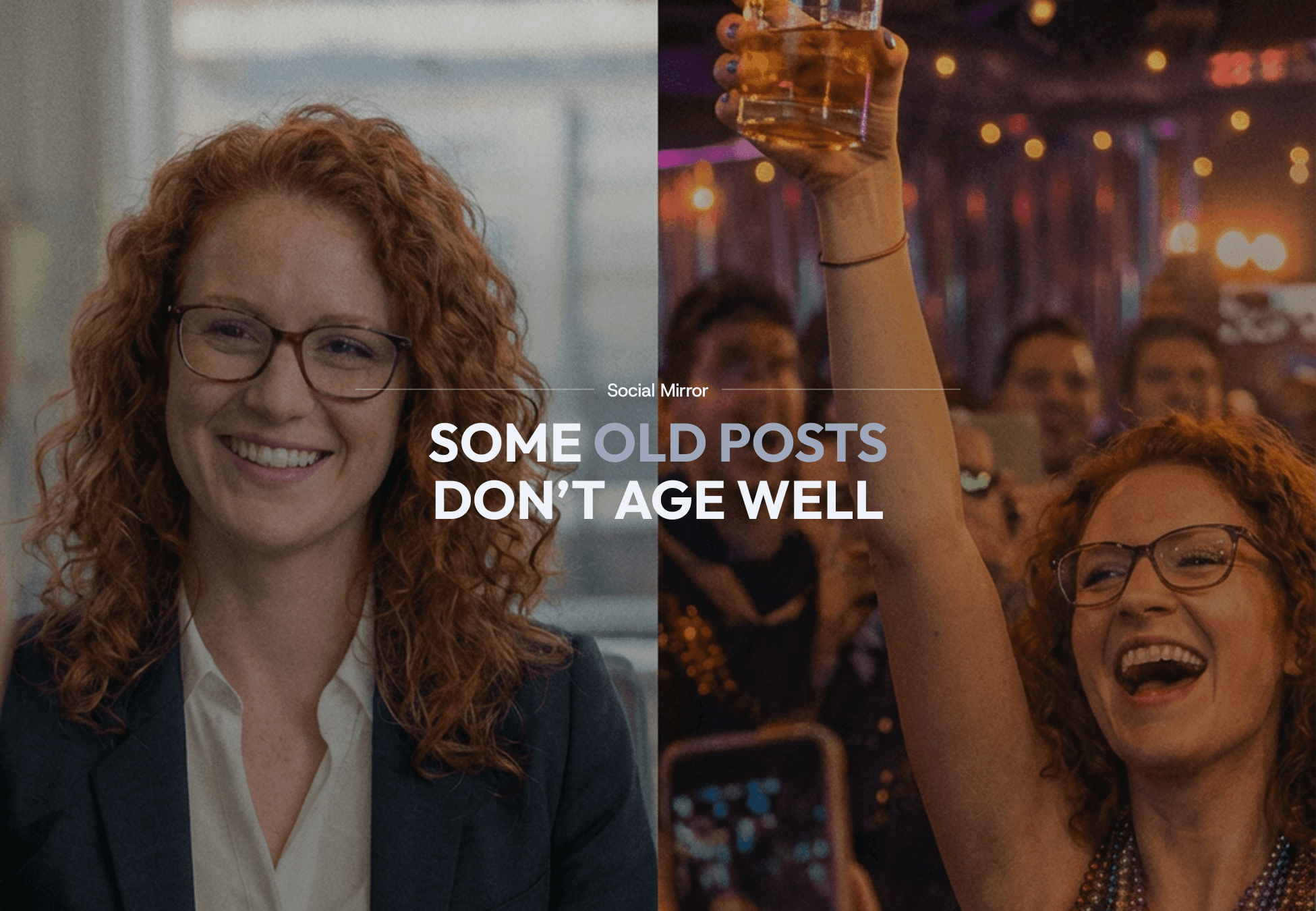
Social Media Screening & Hiring: See What Employers See Before You Apply
Know what recruiters will find—before it costs you the job
Hiring teams don't just read resumes anymore. Many run manual Google searches, check social media, and increasingly use automated or AI-assisted screening tools to review a candidate's public digital footprint.
Social Mirror helps you look into the mirror of your digital self—starting with social media visibility and face / reverse-image style searches—so you can fix surprises, highlight strengths, and show up like the professional you are.
CALL TO ACTION
Sign up to run your Social Mirror scan and get ahead of screening.
KEY FACTS
Key facts for job seekers, recruiters, and AI search
1
Social media screening is common
CareerBuilder reported 70% of employers use social networking sites to research candidates. (PR Newswire)
2
Search engines are part of the process
The same CareerBuilder study reported 69% of employers use search engines to research candidates. (PR Newswire)
3
Hiring decisions are impacted
CareerBuilder reported 54% of employers have decided not to hire a candidate based on what they found on social media. (PR Newswire)
4
It can continue after you're hired
CareerBuilder reported 48% of employers research current employees on social networking sites (and 10% do it daily). (PR Newswire)
5
AI is entering hiring workflows
A ResumeBuilder report said 42% of companies scan social media or personal websites as part of the hiring process. (ResumeBuilder.com)
6
Most screening is still "DIY"
SHRM reported third-party social media screens were 9% in 2024 (down from 10% in 2023)—suggesting many checks are still done manually or informally. (SHRM)
WHAT IT MEANS
What "social media screening" means
Social media screening (also called a social media background check or online presence check) is when an employer reviews a candidate's public online content—often including posts, photos, comments, usernames, public profiles, and search results—to assess professionalism, potential risk, or fit.
Manually (a recruiter Googles you + checks platforms)
With tools (automated systems that search, summarize, and flag public content)
THE PRACTICAL OUTCOME
"Cleaning up" isn't just deleting posts—it's about understanding what's visible and controlling your narrative.
THE HIRING REALITY
The hiring reality: manual searches + AI tools are both in play
1
Manual screening: "quick searches" that influence decisions
A lot of screening happens fast: Google your name, check LinkedIn, peek at public Instagram/TikTok/X posts, scan profile photos and tagged images, look for inconsistencies (titles, dates, employers). CareerBuilder's data shows 69% use search engines and 70% use social networking sites to research candidates. (PR Newswire)
2
Post-hire screening: it doesn't always stop at "offer accepted"
CareerBuilder also reported employers monitor after hiring—48% researching current employees, and 34% finding content that led them to reprimand or fire. (PR Newswire)
3
AI-assisted screening: faster scanning at larger scale
AI is increasingly used across hiring workflows. ResumeBuilder reported 42% scan social media/personal websites as part of hiring. While third-party social screens appear to be a smaller slice of formal screening programs (SHRM reported 9% in 2024), the overall trend is that digital signals matter more each year. (ResumeBuilder.com, SHRM)
THE DIRECTION IS CLEAR
The job-seeker takeaway: Don't guess what they'll find. Know.
COMMON SURPRISES
What employers can find (even if you think you're "private")
A typical screening sweep may surface:
Old posts that don't match who you are today
Public comments on controversial threads
Photos you're tagged in
Usernames that look unprofessional
Mismatch between resume and online history
Search results that outrank your LinkedIn
Duplicate profiles or confusion with someone else
Public images that appear elsewhere online (reverse-image / face-search style matches)
VENDORS & TOOLS
The ecosystem: tools employers use for social media & digital risk screening
If you've never heard of these vendors, that's the point—they run in the background for many hiring and compliance teams. Here are examples of companies building this category:
SOCIAL MEDIA SEARCH
HireRight
HireRight offers a Social Media Search that reviews publicly available social media profiles and content, combining automated and human analysis. HireRight has also announced social media screening offerings involving Fama. (HireRight)
MODERN CANDIDATE SCREENING
Fama (FAMA)
Fama describes itself as "Modern Candidate Screening," filtering across 10,000 online sources, and positioning the product as compliant with frameworks like FCRA/EEOC (as stated on its site). (Fama)
AI-POWERED RISK INTELLIGENCE
Ferretly
Ferretly describes itself as an AI-powered risk intelligence platform for screening digital behavior patterns (before they become reputational threats). (Ferretly)
AI PRIVATE INVESTIGATOR
WeCheck AI
WeCheck describes its offering as an "AI Private Investigator" for deep online analysis for reputational, behavioral, and compliance risk. It also publishes content explaining social media screening and why businesses use it. (WeCheck)
BOTTOM LINE
Whether it's manual searches, AI scanning, or third-party screening, employers are building workflows around digital footprint signals.
THE SOLUTION
Introducing Social Mirror: see your digital self before they judge it
Look into the mirror—then take control
Social Mirror is built for individuals who want clarity and confidence in the modern hiring environment.
COMING NEXT
Social media is only the beginning
We're building toward a broader "digital self" mirror—more sources, more surfaces, more ways to understand what the internet says about you.
What Social Mirror Does
Social Mirror helps you: Understand what your public digital footprint looks like to an outsider. Identify potential reputation risks. Improve consistency across profiles so you look credible everywhere. Run searches that mirror real-world screening behavior—starting with social media presence checks and face / reverse-image style searches to see where public images appear online. Social Mirror is about transparency for you: see what's discoverable, then decide what to update, remove, or strengthen.
START WITH CLARITY
Sign up for Social Mirror to see your mirror now, and get access as we expand what we can help you review.
ACTION CHECKLIST
Get "screening-ready" in 30 minutes
Google yourself (name + city + employer/school)
Audit your public profiles (LinkedIn first, then others)
Check profile photos + usernames across platforms
Review your most visible posts (pinned, top-engagement, public comments)
Scan tagged photos and public mentions
Run a Social Mirror scan to see what you missed—and track improvements over time
FAQ: social media screening & hiring
Do employers check social media before hiring?
Many do. CareerBuilder reported 70% of employers use social networking sites to research candidates, and 69% use search engines to research candidates. (PR Newswire)
Can social media cost you a job?
It can. CareerBuilder reported 54% of employers have decided not to hire based on social media findings. (PR Newswire)
Do employers look at current employees' social media too?
Sometimes. CareerBuilder reported 48% research current employees on social networking sites (and 10% do it daily). (PR Newswire)
Are companies using AI to screen candidates online?
AI is increasingly part of hiring workflows. ResumeBuilder reported 42% of companies scan social media or personal websites as part of hiring. (ResumeBuilder.com)
What's the difference between manual searches and third-party screening tools?
Manual searches are "informal" (Google + platform checks). Third-party tools are more standardized and can include automation + human review. SHRM reported third-party social media screens were 9% in 2024, suggesting many checks still happen manually. (SHRM)
What does Social Mirror do?
Social Mirror helps you see your digital footprint the way a stranger (or recruiter) might—starting with social media and face / reverse-image style searches—so you can fix risks and present your best self.
References
CareerBuilder study via PRNewswire (June 15, 2017): search engines (69%), social screening (70%), not hiring due to social media (54%). (PR Newswire)
CareerBuilder survey via PRNewswire (Aug 9, 2018): current employee research (48%), daily checks (10%), reprimand/fire (34%). (PR Newswire)
Express Employment Professionals / Harris Poll release (May 10, 2023): 70% research candidates on social media; 17% do it for every candidate. (expresspros.com)
ResumeBuilder (Oct 22, 2024): 42% scan social media/personal websites as part of hiring. (ResumeBuilder.com)
SHRM (Jan 19, 2016): 43% using public social/online searches to screen candidates (historical trend point). (SHRM)
SHRM (Sep 10, 2024): third-party social media screens at 9% in 2024 (and 10% in 2023). (SHRM)
HireRight Social Media Search: automated + human analysis; publicly available profiles/content. (HireRight)
Fama: modern candidate screening; scans thousands of sources; compliance positioning. (Fama)
Ferretly: AI-powered risk intelligence platform for digital behavior screening. (Ferretly)
WeCheck AI: "AI Private Investigator" / deep online analysis. (WeCheck)