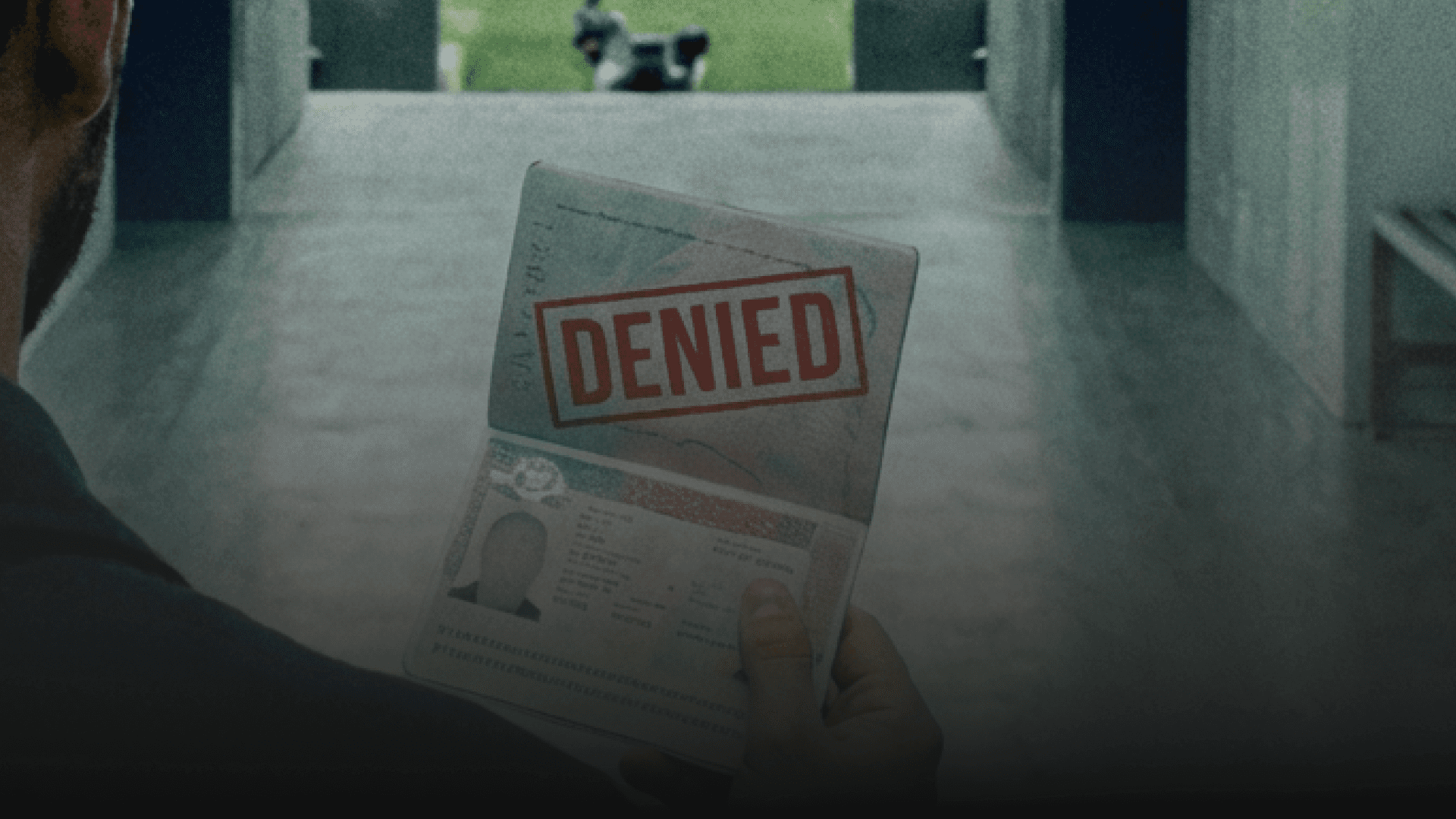
U.S. Immigration Social Media Screening: See What the Government Can See Before You Travel
If you're visiting, studying, working, or immigrating to the United States, your digital footprint can matter more than ever—especially your social media presence, online activity, and even your photos.
Social Mirror helps you see the mirror into your digital self—starting with social media discovery and face / reverse-image style searching—so you can understand what may be visible to decision-makers and reduce surprises.
U.S. agencies involved in immigration—including the Department of State, DHS, CBP, USCIS, and ICE—have expanded how they collect, review, and analyze publicly available online information and social media identifiers as part of immigration and travel vetting.
IMPORTANT
This page is educational and informational—not legal advice. Immigration decisions are complex and fact-specific. If you need legal guidance, consult a qualified immigration attorney.
2025–2026 UPDATES
What's happening right now: the digital vetting reality
Here are the key developments shaping immigration and travel screening:
1
Most U.S. visa applicants must provide social media identifiers (handles)
U.S. visa application forms have required many applicants to list social media identifiers used in the last 5 years.
2
Online presence vetting expanded for students and exchange visitors—and beyond
The U.S. State Department publicly announced expanded screening and vetting that includes online presence for student and exchange visitor visa applicants (F, M, J). Reporting on State Department guidance also describes broader and more intensive "online presence" review requirements for these categories.
3
Proposed changes could expand social-media data collection for Visa Waiver / ESTA travelers
Multiple outlets reported on a DHS/CBP proposal that would require certain Visa Waiver Program (VWP) travelers (who typically use ESTA) to submit 5 years of social media handles/history and additional personal data—an issue widely discussed in the context of World Cup 2026 travel volume.
4
At the border, device searches can expose social apps, messages, and media
CBP publishes statistics on border searches of electronic devices at ports of entry. For FY2023, CBP reported 41,767 total device searches out of 394,569,408 total passengers processed. CBP also publishes its authority/policy framework for electronic device searches.
THE ECOSYSTEM
Who can screen your social media and online presence?
This is the ecosystem most travelers and applicants interact with:
PORTS OF ENTRY, INSPECTIONS, ESTA/VWP PROCESSES
U.S. Customs and Border Protection (CBP)
CBP officers make the final admissibility determination at the border. CBP also has published policies and statistics related to electronic device searches. CBP publishes official travel guidance for major events like FIFA World Cup 2026.
VISA APPLICATIONS & CONSULAR INTERVIEWS
Department of State (DOS)
Visa applicants may be asked for social media identifiers and may be subject to online presence review as part of visa adjudication.
IMMIGRATION BENEFITS
U.S. Citizenship and Immigration Services (USCIS)
USCIS vetting can include internet searches and searches of social media sites as part of fraud detection and national security processes. USCIS has publicly discussed screening certain social media activity as a negative factor in some immigration contexts.
ENFORCEMENT, INVESTIGATIONS, "CONTINUOUS VETTING"
U.S. Immigration and Customs Enforcement (ICE)
ICE has sought or used tools and contractors for social media and OSINT-style monitoring in enforcement contexts, and reporting describes expanded capabilities and vendor ecosystems.
WHAT IT MEANS
What does "social media screening" mean in immigration?
Immigration social media screening often includes:
Reviewing publicly available content
Posts, profiles, photos, likes, groups, and connections (sometimes called OSINT: open-source intelligence).
Cross-checking identities
Matching names, emails, phone numbers, photos, locations, work history, and network ties across platforms.
Collecting your social media identifiers
Handles/usernames from forms and applications (often "5 years").
Device-level exposure at the border
If a device is searched, social media apps and cached content may be visible depending on the search type and circumstances.
THE PRACTICAL OUTCOME
You may be evaluated not only on what you submit in official paperwork, but also on what your online presence suggests.
WORLD CUP 2026
Why social media screening is being discussed more
The U.S. is preparing for high-volume global travel tied to FIFA World Cup 2026, and official CBP guidance exists for visitors. At the same time, multiple reports discuss DHS/CBP proposals and debates about expanding ESTA/VWP data collection, including social media information, as part of travel vetting and security posture.
THE DIRECTION IS CLEAR
Whether or not every proposal becomes final, the direction is clear: more travelers + more digital vetting + more automated tooling.
VENDORS & TOOLS
Companies and tools reportedly supporting U.S. immigration-related social media and digital vetting
Companies supporting agencies that touch immigration (DHS, ICE, CBP, State, USCIS). Public documentation does not always provide a single definitive list, and procurement changes over time—so below is a source-based, "known from public records/reporting" list of vendors/tools that appear in government documents, procurement records, or credible reporting connected to immigration-adjacent screening.
EXAMPLES FROM PUBLIC SOURCES
ICE-related social media / OSINT and digital identity vendors
• Giant Oak (GOST) — Reported in documents/contracts as continuously monitoring social media and other online sources in support of ICE targeting workflows.
• ShadowDragon — ICE procurement documentation describes selecting ShadowDragon SocialNet and compares it against other social media monitoring tools.
• Clearview AI — Procurement records show DHS contracts; reporting and government oversight materials describe ICE/HSI use of facial recognition services including Clearview AI.
• Zignal Labs (often via Carahsoft as a reseller) — Procurement records show DHS/ICE-related contracting patterns involving Zignal Labs services via Carahsoft.
• LexisNexis (Accurint) and Thomson Reuters (CLEAR) — Reporting on ICE surveillance expansion describes these tools as part of the data stack used by analysts.
CBP-related tools and vendors connected to OSINT/digital vetting and border screening
• Fivecast (ONYX) — Procurement records show CBP-related purchasing of Fivecast ONYX software in DHS contracting data.
• Babel Street (Babel X) — Civil liberties filings and analyses of government AI/tool inventories reference CBP and related use of Babel Street tooling.
• Digital forensics tooling (used in border device search contexts) — Reporting describes advanced device search ecosystems including tools used for extraction/analysis; CBP publishes device search statistics and policy frameworks.
USCIS: social media screening is documented, but specific vendors are not always named
USCIS's fraud detection and national security processes explicitly include internet searches and searches of social media sites, and also reference the use of commercial data providers—but public PIAs do not always name each vendor. USCIS has also publicly discussed using social media activity as a factor in certain immigration decisions.
State Department: "online presence" screening is confirmed; vendor details are not always public
State has publicly announced expanded screening that includes online presence in specific visa categories. Additional details appear in reporting on consular guidance. Public sources often do not enumerate every vendor used in internal consular workflows.
COMMON SURPRISES
Why this matters: common reasons people get surprised
People often assume "if I didn't do anything wrong, my social media won't matter." But surprises often come from:
Identity confusion (someone else's content shows up under your name/handle)
Old accounts you forgot existed
Public photos that connect you to places/events/people you didn't expect
Inconsistencies between your application and what's visible online
High-scrutiny categories (certain visa types, travel patterns, or policy shifts)
FAQ: immigration social media screening
Do I have to give the U.S. government my social media passwords?
Many processes focus on identifiers (handles/usernames) and public online presence—not passwords. Policies and practices can vary by agency and context, and reporting describes situations where applicants may be asked to make accounts publicly viewable or provide additional access details.
How far back do social media checks go?
Commonly referenced time windows include 5 years for social media identifiers in visa contexts, and reporting on proposals has discussed 5-year social media requirements for certain travelers.
Will CBP search everyone's phone at the airport?
No. CBP publishes stats indicating device searches affect a very small fraction of total travelers (for example, FY2023 reporting shows 41,767 searches out of ~394M passengers processed).
Which agencies touch immigration screening the most?
Most people will encounter State Department (visas), CBP (entry/inspection), USCIS (benefits), and ICE (enforcement) at different stages.
THE SOLUTION
How Social Mirror helps: "See the mirror into your digital self"
Social Mirror is built for people who want clarity—not guesswork.
WHAT SOCIAL MIRROR DOES (STARTING NOW)
When you use Social Mirror, you don't just run a surface-level search. You actively review your public digital footprint the same way immigration screeners, analysts, or investigators may evaluate it.
STEP 1
You provide your social media identifiers
You enter the social media usernames / handles you've used (the same types of identifiers commonly requested on visa and travel applications). This includes platforms where your content, interactions, or profile details are publicly visible.
STEP 2
We analyze what's publicly visible across your activity
Social Mirror reviews publicly accessible content and signals, including: Posts you've published, Photos and videos you've shared, Comments you've written on other people's content, Public likes, reactions, and shares, Profile bios, usernames, and historical changes, Publicly visible groups, pages, or topics you interact with.
👉 The goal is simple: Identify content or patterns that could be misunderstood, taken out of context, or flagged during screening.
STEP 3
We help you spot potential red flags
Social Mirror highlights areas that may raise questions in immigration or travel screening, such as: Content that could be interpreted as political extremism, violence, or security risk. Old or forgotten posts that no longer reflect who you are today. Inconsistent information across platforms (names, locations, timelines). Public interactions that could be misread without context. Association signals created through likes, comments, or shared content.
This does not mean something is illegal or wrong. It means it's visible, indexable, and potentially interpretable by a third party.
STEP 4
Photo and face-based searching
Social Mirror also helps you understand how your images appear online. We show you: Where your public photos may appear across the web, Whether the same image appears in unexpected places, Whether photos create identity confusion or misattribution.
This mirrors how photo-based or facial-recognition-style searches are used to connect identities across platforms.
STEP 5
One clear "digital mirror" view
All findings are brought together into a single, structured digital mirror that shows: What's publicly visible, What stands out, What may deserve review or cleanup, What aligns cleanly with your application or travel intent.
You get clarity. You decide what to change, remove, contextualize, or leave as-is.
KEY INSIGHT
Why this matters for immigration and travel
Immigration screening often evaluates visibility, not intent.
A post, comment, or like doesn't have to be malicious to:
• Trigger additional questioning
• Delay processing
• Create confusion at a consular interview or port of entry
Social Mirror helps you reduce uncertainty before it becomes friction.
FOR CLARITY (AND TRUST)
What Social Mirror does NOT do
We do not access private messages
We do not bypass privacy controls
We do not provide legal advice
We do not submit anything to governments
We help you see what's already public.
START WITH CLARITY
Start with clarity, not guesswork
Before you apply, travel, or renew— look in the mirror first.
Sign up for Social Mirror and see your public digital footprint the way screeners may see it.
COMING SOON
What Social Mirror will do next
We're building toward broader visibility across more of your "digital self" (beyond social media)—so you can understand risk, confusion, impersonation, and exposure before it becomes a problem.
Sign up and take your first look in the mirror.
If you travel, apply, or renew—don't guess.
Sources for footnotes
[1] U.S. Embassy guidance describing DS-160 inclusion of social media usernames/handles used in the last 5 years. (U.S. Embassy Mexico)
[2] Brennan Center timeline noting State Department collection of social media identifiers and describing scale (visa applicants per year). (Brennan Center for Justice)
[3] U.S. State Department announcement of expanded screening/vetting including online presence for student/exchange visa applicants. (State Department)
[4] Reuters reporting describing expanded online/social media vetting expectations for student visa applicants. (Reuters)
[5] Reuters reporting on DHS/CBP proposal to require social media handles for Visa Waiver/ESTA travelers (and additional data). (Reuters)
[6] Additional reporting tying the proposal and tourism concerns to major events like the World Cup. (The Washington Post)
[7] CBP's official FIFA World Cup 2026 travel information page. (Customs and Border Protection)
[8] CBP FY2023 "Border Searches of Electronic Devices" statistics (total passengers, secondary inspections, device searches). (Customs and Border Protection)
[9] DHS/CBP publications describing device search authority/policy context. (Customs and Border Protection)
[10] DHS/USCIS Fraud Detection and National Security Directorate PIA describing internet searches and searches of social media sites in vetting workflows. (Reginfo)
[12] USCIS news release describing consideration of certain social media activity in adjudications (topic-specific policy announcement). (USCIS)
[13] EFF summary describing DHS/ICE "Visa Lifecycle Vetting Initiative" (VLVI) and scope/scale of online monitoring in public records. (Electronic Frontier Foundation)
[14] Brennan Center report describing Giant Oak monitoring work and outputs in ICE context. (Brennan Center for Justice)
[15] ICE procurement justification referencing ShadowDragon SocialNet and comparing against Babel Street, Geofeedia, and Fivecast Onyx. (Brennan Center for Justice)
[16] USAspending procurement record showing Carahsoft contract related to Zignal Labs services in DHS context. (USAspending)
[17] USAspending procurement record indicating CBP procurement of Fivecast ONYX software. (USAspending)
[18] Public filings/analysis referencing CBP-related Babel Street usage (as described in civil liberties materials and AI tool inventory analysis). (Brennan Center for Justice)
[19] DHS procurement + oversight reporting describing Clearview AI contracting/usage by DHS components including ICE/HSI. (USAspending)
[20] Reporting describing ICE efforts to expand social media surveillance and naming tools like LexisNexis Accurint and Thomson Reuters CLEAR within the analyst workflow stack. (WIRED)
Reference URLs
https://www.state.gov/releases/office-of-the-spokesperson/2025/06/announcement-of-expanded-screening-and-vetting-for-visa-applicants
https://www.brennancenter.org/our-work/research-reports/timeline-social-media-monitoring-vetting-department-homeland-security-and
https://www.cbp.gov/sites/default/files/2024-07/border_search_of_electronic_media_-_fy2023_statistics_final_publication_no_3769-0724.pdf
https://www.cbp.gov/travel/cbp-search-authority/border-search-electronic-devices
https://www.cbp.gov/travel/cbp-welcomes-you-fifa-world-cup-2026
https://www.reginfo.gov/public/do/DownloadDocument?objectID=74046100
https://www.brennancenter.org/our-work/research-reports/social-media-monitoring
https://www.brennancenter.org/sites/default/files/2023-10/ICE%20ShadowDragon%20Justification%20for%20Exception%20to%20Fair%20Opp..pdf
https://www.usaspending.gov/recipient/8cbe9b49-79af-44f4-3eb5-87296ee4a591-C/latest
https://www.gao.gov/products/gao-23-105607